 how-to
Why Do My Makeup Brushes Feel Scratchy?
Table of Contents
- The Most Common Reasons Your Makeup Brushes Feel Scratchy
- How to Clean Professional Makeup Brushes Properly
- How to Soften Synthetic Makeup Brushes at Home
- Can Scratchy Makeup Brushes Actually Harm Your Skin?
- How to Store and Dry Your Brushes to Prevent Scratchiness
- Signs It Is Time to Replace Your Makeup Brushes
- Choosing Brushes That Stay Soft Longer
- Conclusion
Last Updated: August 21, 2026
The Most Common Reasons Your Makeup Brushes Feel Scratchy
If you've ever pressed a brush to your face and winced, you already know the frustration. Why do my makeup brushes feel scratchy all of a sudden, when they used to be so soft? At Girl Meets Brush, we hear this question constantly, and the good news is that scratchiness is almost always fixable. Understanding the cause is the first step.
Scratchy brushes are rarely a sign that you bought the wrong thing. More often, they're a sign that something has changed in how the brush is being cleaned, dried, or stored.
Product Buildup and Residue
This is the most common culprit by far. Foundation, concealer, and setting powder all accumulate in the bristles over time. When that residue hardens, it stiffens the fibres and creates a rough, bristly texture that drags across skin instead of gliding.
The problem compounds itself. The more buildup there is, the harder it becomes to remove with a quick clean. Many people wipe their brushes on a cloth between uses and assume that's enough. It isn't. A surface wipe removes pigment but leaves behind oils, silicones, and wax from the product itself, all of which stiffen the bristles.
Hard Water Damage
Hard water is a genuine issue for brush care, and it's one that most guides overlook. According to UK Water Quality data from the Drinking Water Inspectorate, a significant portion of homes receive hard or very hard water, particularly across the south and east of England.
Mineral deposits from hard water cling to brush fibres after washing. Over time, they create a stiff, almost crunchy texture that no amount of rinsing seems to fix. If your brushes feel scratchy specifically after washing, hard water is likely a factor.
Incorrect Drying Techniques
Drying brushes upright in a pot is one of the most widespread mistakes in brush care. Water travels down the bristles into the ferrule (the metal band that holds them in place), loosening the glue and eventually causing bristles to splay outward and stiffen.
Laying brushes flat is better, but there's a subtlety here too. If brushes are left on a non-breathable surface, moisture gets trapped underneath and the bristles dry in a compressed, misshapen position. The result? A brush that feels scratchy and applies unevenly.
How to Clean Professional Makeup Brushes Properly
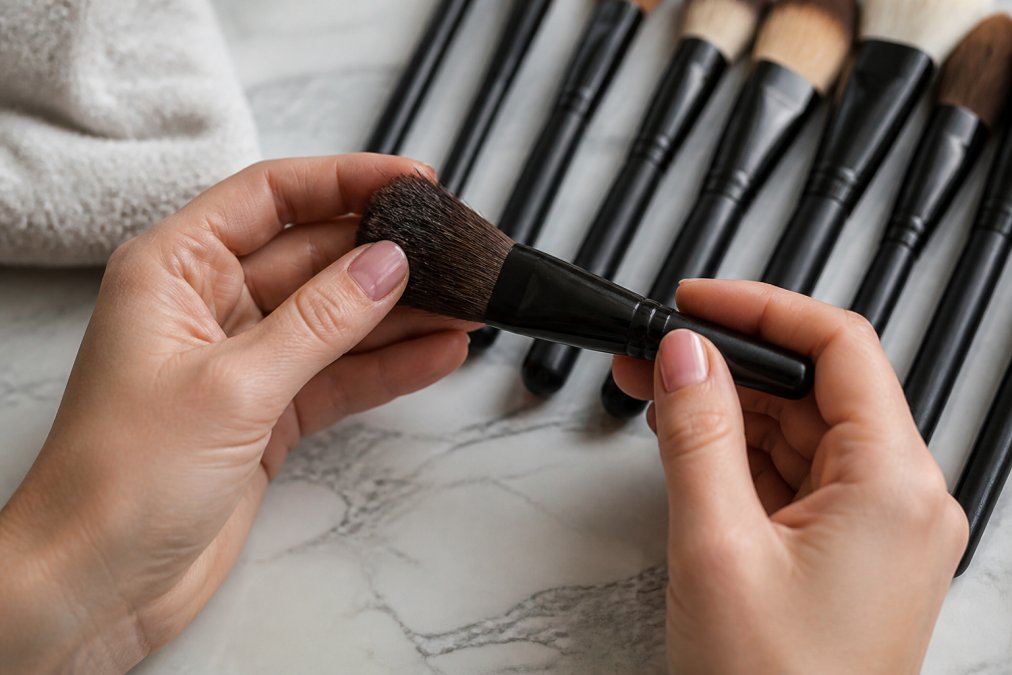
Knowing how to clean professional makeup brushes correctly is the single most effective thing you can do to restore softness and extend the life of your tools. A proper deep clean removes everything that a quick wipe cannot.
What You'll Need
- A gentle, sulphate-free shampoo or dedicated brush cleanser
- A shallow bowl or clean sink
- A silicone brush cleaning mat or textured glove (optional but helpful)
- Clean, dry towels
- A brush drying rack or rolled towel for reshaping
Step-by-Step Deep Clean
Step 1: Wet the bristles [Time: 30 seconds per brush] Hold the brush with bristles pointing downward under lukewarm running water. Avoid getting water above the ferrule. Hot water softens the glue holding the bristles in place.
Step 2: Apply cleanser [Time: 30 seconds] Dispense a small amount of cleanser into your palm or onto a cleaning mat. Work the bristles in gentle circular motions. You'll see colour releasing almost immediately.
Step 3: Rinse thoroughly [Time: 1 minute] Rinse under cool water until the water runs completely clear. Incomplete rinsing is a major cause of scratchiness because residual cleanser dries stiff.
Step 4: Squeeze and reshape [Time: 30 seconds] Gently squeeze excess water from the bristles using a clean towel. Reshape the brush head with your fingers while it's still damp. This is when you can correct any splaying.
Step 5: Dry flat or inverted [Time: overnight] Lay brushes flat on a clean towel, or hang them bristles-down using a drying rack. Never stand them upright while wet.
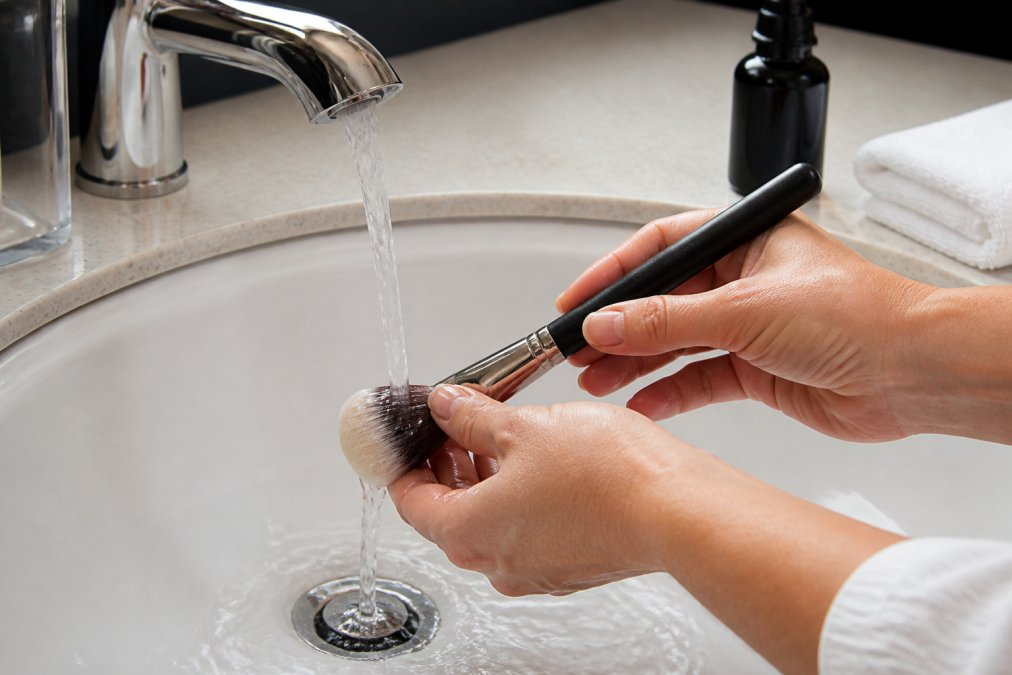
Expected Result: After a full deep clean and proper drying, most brushes will feel noticeably softer within 24 hours.
How to Soften Synthetic Makeup Brushes at Home
Synthetic brushes are generally more resistant to damage than natural hair brushes, but they can still become stiff and scratchy, particularly after exposure to silicone-heavy products or harsh cleansers.
The most reliable way to soften synthetic makeup brushes at home is a conditioning rinse. After your regular clean, work a small amount of hair conditioner through the bristles, leave it for two to three minutes, then rinse thoroughly with cool water. The conditioner coats the synthetic fibres and restores a smooth, soft feel.
A few other approaches that genuinely work:
- Olive oil soak: Dip bristles lightly in a small amount of olive oil, work it through, then wash out with a gentle cleanser. This is particularly effective for brushes that have become stiff from product buildup.
- Baby shampoo wash: Milder than most cleansers, baby shampoo is less likely to strip synthetic fibres and tends to leave them softer after drying.
- Cool water rinse: Always finish with cool water rather than warm. Warm water opens the fibre cuticle slightly, making bristles feel rougher after drying.
The thing nobody tells you about synthetic brushes is that the cleanser matters as much as the cleaning technique. Anything with alcohol or sulphates strips the coating from synthetic fibres and accelerates stiffening. Check the label before you reach for it.
Can Scratchy Makeup Brushes Actually Harm Your Skin?
Scratchy makeup brushes can cause real irritation, particularly for anyone with sensitive skin. The physical friction from stiff bristles creates micro-abrasions on the skin's surface, which can trigger redness, breakouts, and increased sensitivity over time.
It's a bigger concern than most people realise. According to guidance on skin barrier function from the British Association of Dermatologists, repeated mechanical irritation is one of the more common but underestimated triggers for contact dermatitis and barrier disruption.
For professional make-up artists working on multiple clients, the stakes are higher. A scratchy brush drags rather than blends, compromising the finish and potentially causing discomfort during application. It also creates tiny channels in the skin where bacteria from product residue can settle.
The practical upshot: if your brushes feel scratchy, don't push through it. Fix the problem before your next application, especially if you're working on clients.
How to Store and Dry Your Brushes to Prevent Scratchiness
Storage is where most brush care routines fall apart. Getting the cleaning right but storing brushes incorrectly means you'll be fighting scratchiness on a loop.
The essentials for keeping brushes soft between uses:
- Store brushes bristles-up in a holder once they are fully dry. Never while still damp.
- Keep them away from direct sunlight, which degrades both natural and synthetic fibres over time.
- Avoid storing brushes loose in a bag where bristles get crushed and bent. A roll-up brush case or individual brush guards protect the shape.
- In dusty environments, a covered holder or a lidded case keeps debris off the bristles.
For drying, a brush drying rack that holds brushes at an angle (bristles pointing down or sideways) is the most effective option. It prevents water from pooling in the ferrule while allowing air to circulate around the bristles. A rolled-up towel works as a free alternative: roll the towel into a cylinder, then rest the brush handles over the edge so bristles hang slightly downward.
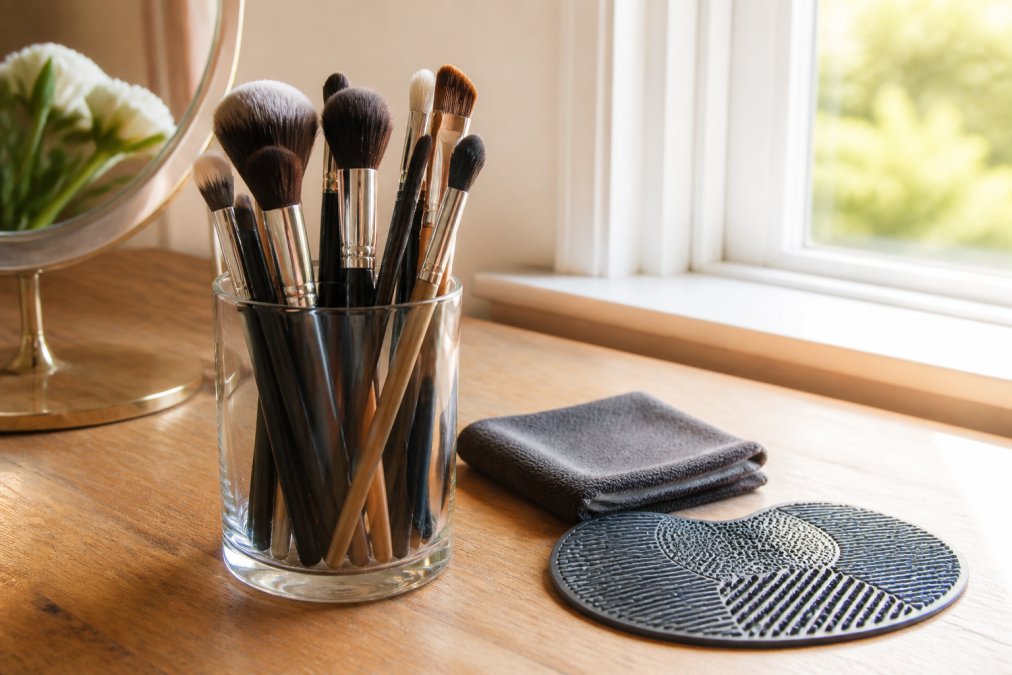
Signs It Is Time to Replace Your Makeup Brushes
Cleaning and conditioning can only do so much. Knowing the signs it is time to replace makeup brushes saves you from persisting with tools that are genuinely past their best.
| Sign | What It Means | Action |
|---|---|---|
| Persistent scratchiness after cleaning | Fibres are permanently damaged | Replace the brush |
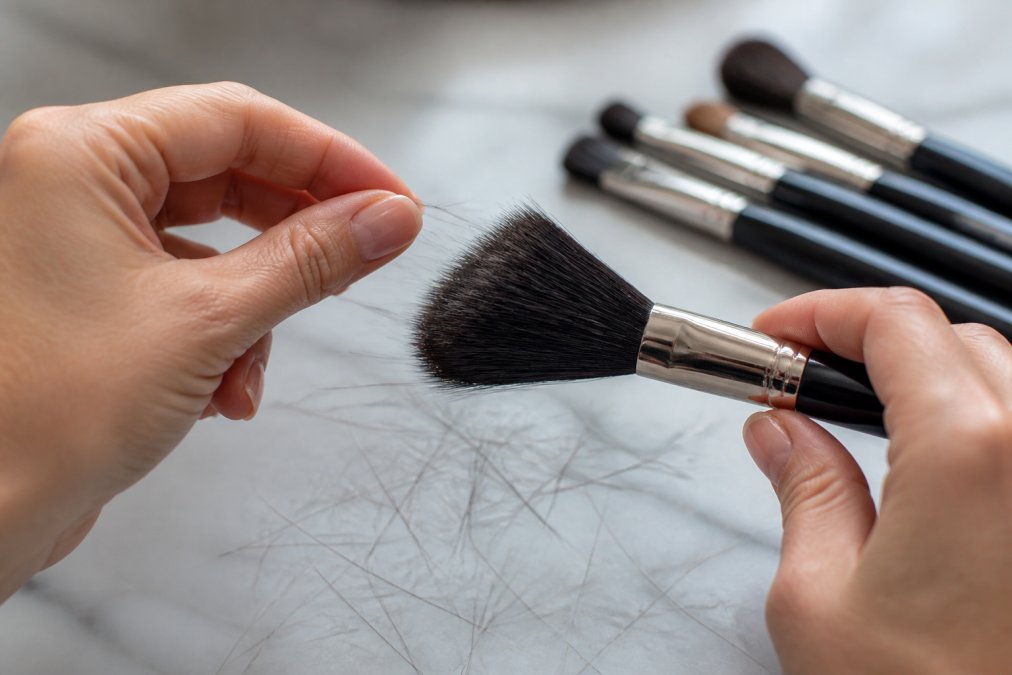
| Shedding bristles with every use | Ferrule glue has broken down | Replace immediately |
| Bent or splayed bristles that won't reshape | Structural damage to the brush head | Replace the brush |
| Discolouration that won't wash out | Deep product saturation in fibres | Replace the brush |
| Smell that persists after cleaning | Bacterial or mould growth in ferrule | Replace immediately |
A common mistake is hanging on to brushes out of habit or cost-consciousness long after they've stopped performing. A brush that sheds, smells, or applies unevenly is actively working against your results, not helping them.
For professional make-up artists, the replacement timeline is shorter than for personal use. High-frequency use accelerates wear, and client work demands tools that perform consistently. Many professionals assess their kits every six months and replace anything showing early signs of deterioration.
According to guidance on cosmetic tool hygiene from the Chartered Institute of Environmental Health, regular replacement of applicators and brushes is considered best practice for maintaining hygiene standards in professional beauty settings.
Choosing Brushes That Stay Soft Longer
The answer to why do my makeup brushes feel scratchy often comes down to the quality of the brush in the first place. Lower-quality brushes use fibres that are more susceptible to stiffening, shedding, and breakdown, regardless of how carefully you clean them.
A few things to look for when choosing brushes built to last:
- Densely packed bristles: More fibres mean better product pickup and less individual fibre stress during use.
- Tightly sealed ferrules: A well-constructed ferrule keeps bristles secure and prevents water ingress during cleaning.
- High-quality synthetic or ethically sourced natural fibres: The fibre itself determines how the brush feels and how it holds up over time.
- Balanced weight and handle length: A well-balanced brush reduces the pressure you apply during use, which means less wear on the bristles.
This is where investing in professionally designed brushes makes a genuine difference. Girl Meets Brush, founded by celebrity make-up artist Lynne Mills, was built around exactly this problem. The brushes are designed for precision and durability, with professional-grade construction that holds up to regular deep cleaning and intensive use. Whether you're building a personal kit or stocking tools for client work, the quality of the brush determines how long it stays soft and how well it performs.
The real difference between a brush that stays soft for years and one that turns scratchy within months isn't how you clean it. It's what it's made of and how it was put together.
Scratchy brushes are one of those problems that feel minor until they're not. Stiff bristles compromise your application, irritate your skin, and make the whole process less enjoyable. The good news is that most cases are entirely preventable with the right cleaning routine, proper drying technique, and thoughtful storage. Girl Meets Brush offers a range of expertly crafted brushes designed to stay soft through regular professional use, with precision construction that holds its shape wash after wash. Visit Our Shop Here and find the brushes that will genuinely last.
Frequently Asked Questions
Is it normal for makeup brushes to feel scratchy?
New brushes can sometimes feel a little stiff straight out of the packaging, which is perfectly normal. A gentle wash usually softens them up straight away. If brushes that were previously soft have become scratchy over time, that's a sign of product buildup, hard water residue, or incorrect drying. Regular cleaning and proper storage should restore their softness. If scratchiness persists despite good care, it may be time to replace them.
Does washing makeup brushes make them softer?
Yes, washing your makeup brushes is one of the most effective ways to restore softness. Accumulated product, oils, and residue stiffen the bristles over time. A thorough clean with a gentle brush cleanser or mild shampoo removes that buildup and leaves the fibres feeling soft and flexible again. Conditioning the bristles with a small amount of hair conditioner after washing can give synthetic brushes an extra boost of softness.
Can scratchy makeup brushes cause skin irritation?
They can, yes. Stiff or rough bristles create friction against the skin, which can lead to redness, sensitivity, and even small abrasions if used repeatedly. People with sensitive or reactive skin are particularly susceptible. Dirty brushes also harbour bacteria and old product, which can trigger breakouts and irritation. Keeping your brushes clean and replacing them when they become permanently misshapen or scratchy is the simplest way to protect your skin.
How often should you replace your makeup brushes?
With proper care, good-quality makeup brushes can last several years. As a general guide, replace brushes when the bristles shed excessively, lose their shape permanently, smell musty even after cleaning, or feel rough despite regular washing. Foundation and concealer brushes tend to wear faster than powder brushes due to heavier product use. Investing in well-made brushes and cleaning them consistently means you'll replace them far less often than with cheaper alternatives.
This article was written using GrandRanker